


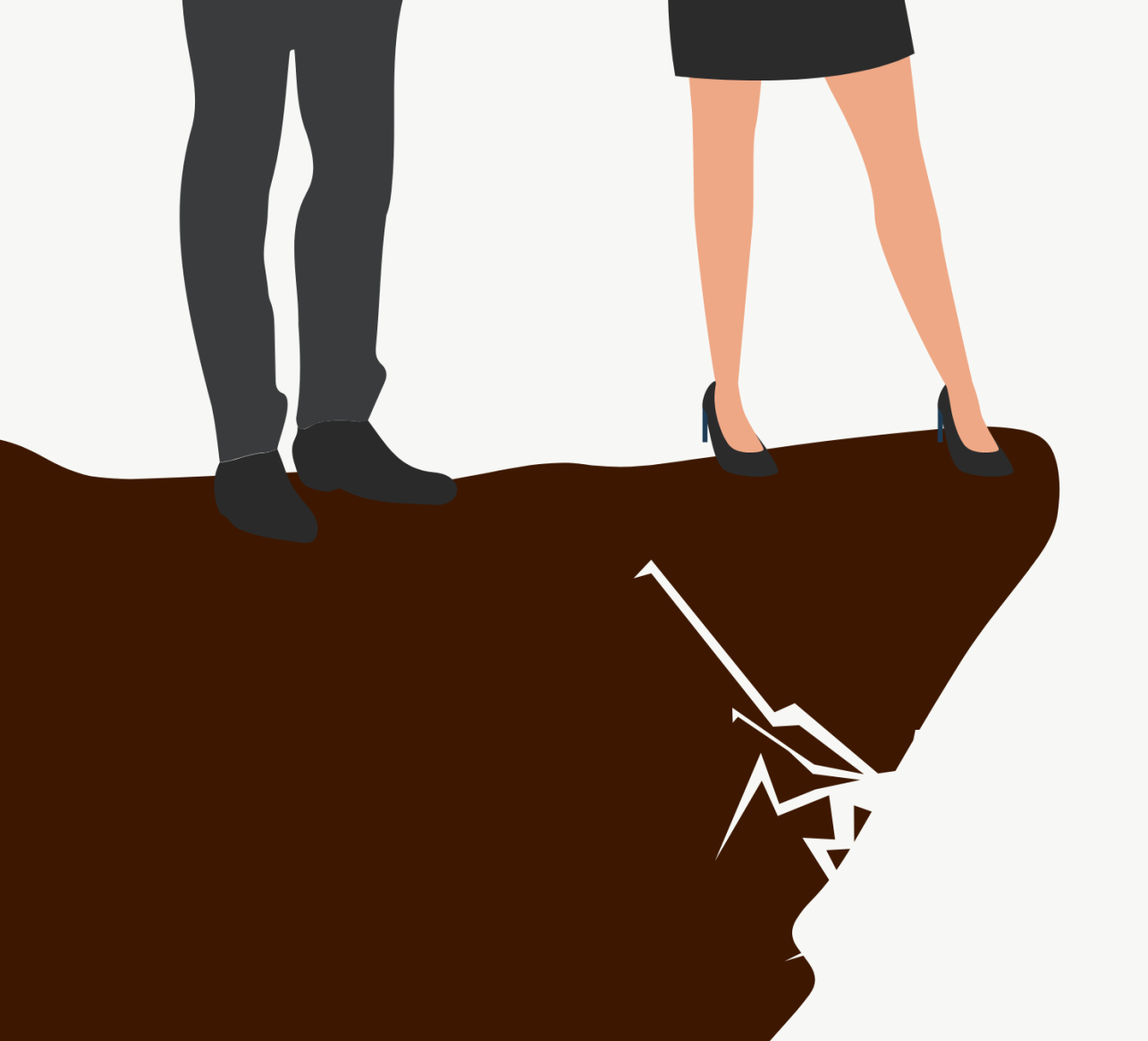
When Donald Trump fired Pam Bondi as attorney general earlier this month, it echoed a pattern political psychologists have been warning about for two decades: the “glass cliff.”
Coined by Michelle Ryan and Alexander Haslam, the term describes a recurring dynamic in leadership. Women and people from underrepresented groups are more likely to be elevated to positions of power during moments of crisis — when the odds of success are slim and the risk of failure is high. If they succeed, credit goes upward. If they mess up or fail, blame lands flatly on them.
The International Studies Review reaffirms this mechanism, noting that under crisis conditions, male leaders may “eagerly [step] aside” to let women assume leadership roles — and the risks they hold.
Recent turnover among high-profile women in Trump’s orbit reflects that pattern.
The ladder with missing rungs

Consider Kristi Noem. She stepped into a Department of Homeland Security strained by record border encounters, bureaucratic backlogs, and internal dysfunction. As one of the most visible defenders of a hardline immigration agenda, she absorbed intense public and congressional criticism over policies that triggered legal challenges and national debate. By early 2026, that scrutiny had reached a peak.
Following a widely criticized congressional appearance — where she faced questions about a costly DHS ad campaign, an inspector general investigation tied to her inner circle, and personal controversies — she was fired and replaced by Markwayne Mullin.
What followed illustrates how the “glass cliff” operates even after the fall. Mullin entered the same troubled department, but was given space to reset. He rolled back key policies, including internal approval requirements, and began reshaping the agency’s direction.
Critics who had condemned Noem quickly praised his changes. As Sen. Thom Tillis put it, Mullin isn’t expected to “repeat the mistakes” that Neom was too often “winging.” An odd thing to say, seeing as neither started with the traditional pedigree that used to be the baseline for the role.
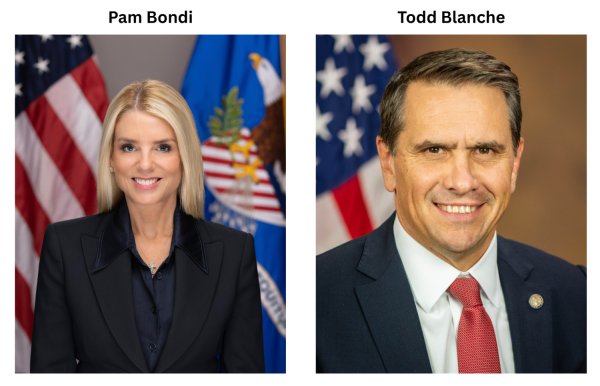
Bondi faced a different kind of scenario. As attorney general, she oversaw the release of documents tied to Jeffrey Epstein — an issue constrained by legal limits, shaped by victims’ rights, and driven by intense public pressure.
The outcome satisfied almost no one. Trump criticized her as “weak,” and on April 2, she was replaced by Todd Blanche, who was Bondi’s Deputy Attorney General.
Blanche also was previously Trump’s criminal defense attorney during the trial in which the former president was convicted on 34 felony counts.
The fallout did not end with her removal. Questions over congressional testimony and legal accountability remained. Rep. Nancy Mace argued against Bondi that “leaving office doesn’t mean you get to dodge accountability.”
But when releasing a statement about Trump’s 34 felonies, Mace said: “The Biden administration has treated its authority like we’re in a third-world, banana republic, leading to an unjust guilty verdict against Donald Trump.”
Notice the double standard: Bondi must face accountability, yet Trump’s conviction is seen as a “dark day for American justice.”
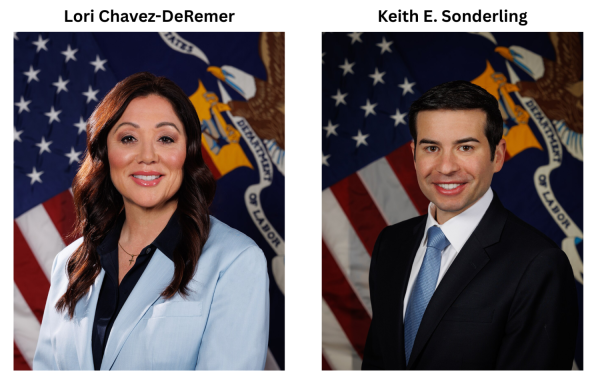
At the Department of Labor, Lori Chavez-DeRemer became the third Cabinet member to exit. Her resignation followed months of investigation into alleged misconduct, including misuse of resources and personal controversies. The official explanation — that she would move to the private sector — echoed familiar language used in other high-profile departures. She was replaced by Keith Sonderling, Chavez-DeRemer’s Deputy Secretary of Labor.
Then there is Tulsi Gabbard. Reports indicated that Trump grew frustrated with her reluctance to fully align with the administration’s stance on military action in Iran. At one point, he was said to be considering her replacement.
What reportedly prevented that outcome was not a change in performance, but a political strategy: removing her could elevate her as an anti-war figure and potential future rival for JD Vance. For now, she remains — but under conditions that emphasize how unstable her position is.
Where are the men?
The pattern becomes clearer in comparison.
Male officials within the same administration have navigated comparable — or greater —controversies without facing the same consequences. Pete Hegseth, for example, assumed one of the most demanding roles in government despite questions about his experience. Yet the challenges surrounding his tenure are more often framed in terms of institutional constraints, geopolitical complexity, or bureaucratic resistance. His position remains intact.
This difference in framing matters. When men struggle, the system is questioned. When women struggle, she is questioned. None of this suggests that the women who served in these roles are beyond criticism. Some were underqualified. Some made consequential mistakes. But the same can be said of their male counterparts. The difference lies in how failure is interpreted — and how quickly it becomes disqualifying.
For men, failure is often treated as a phase. For women, it becomes them.
The widespread pattern
Focusing solely on individual shortcomings is precisely how the “glass cliff” remains invisible. It shifts attention away from the conditions that make success unlikely in the first place.
Appointments made during moments of instability are not neutral opportunities. They are structurally different from roles assumed during periods of stability. They come with heightened scrutiny, fewer margins for error and greater political risk. When women are disproportionately placed into these roles, the outcome is predictable: higher visibility, faster backlash and shorter tenures.
Breaking that cycle requires asking harder questions at the moment of appointment — not just at the moment of failure. What resources are leaders given? What expectations are set? And when outcomes fall short, is accountability applied consistently?
The “glass cliff” persists because it is easy to overlook. Each dismissal can be explained on its own terms. Taken together, however, they point to something more systematic: a pattern in which women are elevated into unstable positions, praised while they endure them, and tossed when those positions inevitably create conflict.
This phenomenon extends beyond government. Similar dynamics have been documented in industries ranging from corporate leadership to gaming. The setting changes. The pattern does not.
The “glass cliff” is not about arguing that women are blameless. It is about recognizing that they are often not given the same conditions to succeed — or the same room to fail. Until that changes, the cycle will continue: women will be promoted into instability, judged for outcomes shaped by that instability, and replaced once the cost becomes too high.
The system has been built on a simple trade: women fall so that the men above them don’t have to.