
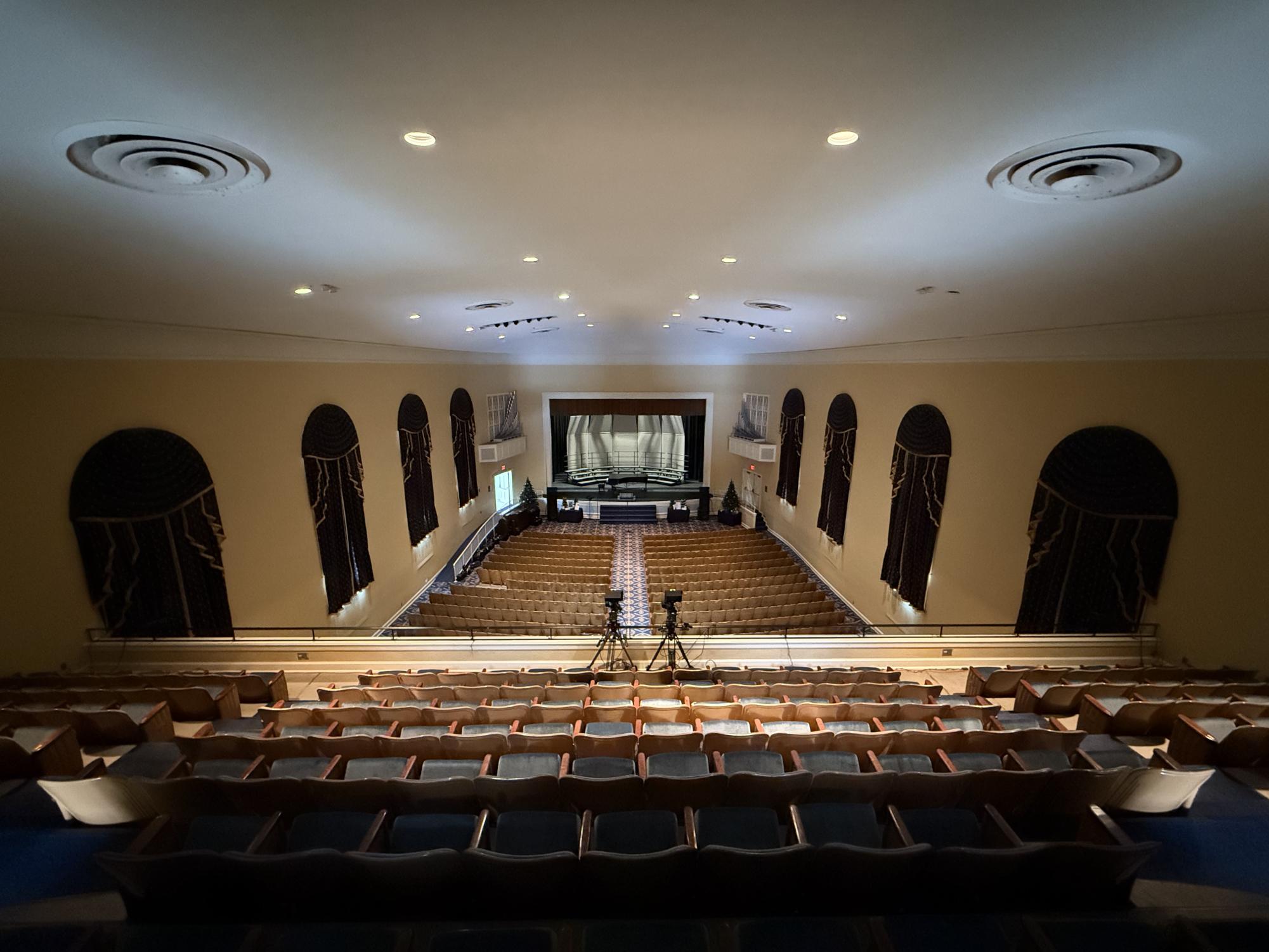

When you go to see a concert or event, do you want to listen to it through 20-year-old speakers that do not work properly, are run by mis-matched and equally as old amplifiers, and were found in the back of a workshop because they hadn’t been used for years? Then you can attend an event in Schaller Chapel at Buena Vista University.
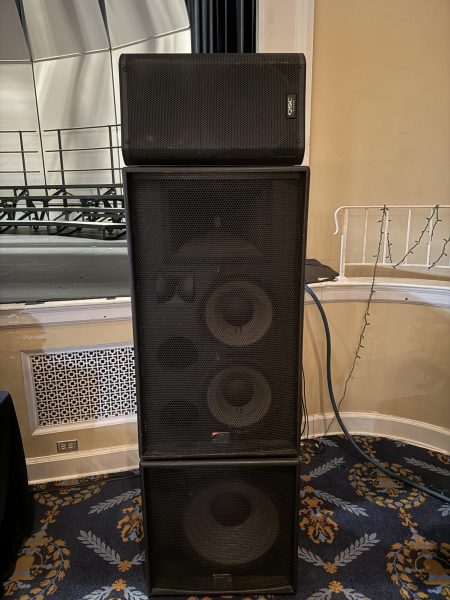
According to the BVU website, Schaller is an 822-capacity venue and is the largest performing space on campus hosting music events for the ensembles on campus, the American Heritage Lecture Series, and other events. The website also highlights all of the tech that Schaller has to offer, but it is all outdated. Schaller has gotten a new lighting system, but the PA system (Public Adress or “main speaker”) has broken and been replaced with the old, back of the workshop speakers. The mixing board that is listed on the BVU website is no longer in use in Schaller.
The speakers not only just sound bad, but they are also completely in the way of performances either taking up space on the stage or blocking the view of the stage while on the ground. BVU hasn’t only neglected to update the sound system in Schaller, but they haven’t even updated the website about the biggest performing space on campus.
Buena Vista University needs to put more thought into Schaller chapel as it’s the largest performing art center on campus. Being in the rock ensemble and jazz band as a performer, to working with the system for events services, I can attest that the system is not adequate for the events that are held in Schaller, and that it is very difficult to work with. The Underground, home of the coffee shop and alternate dining space on campus, has recently added a stage and speakers to the space. It has a better sound system than Schaller, which is interesting because you could maybe get 50 people in there at a time at the most and no any event that has been hosted that gets anywhere using the full potential of the speakers. If we can put nice speakers in a non-musical space, why can’t we give Schaller the sound system it deserves.
Professor Aaron Eastwood, Assistant Professor of Music Production at Buena Vista University, runs the live sound for the BVU rock ensemble and helps facilitate the live sound and streaming for the other ensembles on campus. He also uses the space to teach his intro to audio production and live sound classes.
“The speakers are aging and the sound that we get from them is not the best quality, certainly not what the quality of sound needs to be for a live performance venue,” Eastwood said. “Many venues have arrays of speakers that hang from the ceiling or from the front of the stage… they are large they don’t sound good; they are in the way.”
“We have also had guest performers that have specific technical requirements and our sound system in general does not meet those technical requirements.” He added. “This inadequacy in our system is not only lending itself to subpar sounding concerts, but it also is holding us back from opportunities in both learning and exposure to professional performers, all because our sound system is not good enough.”
“I think that the university needs to consider how the spaces on campus are being used, particularly regarding performance spaces for student ensembles and guest performers” Eastwood agrees that the sound system needs an upgrade, and the school should have this on their priority list.
Tyler Lowe, Theatre Operation and Events Manager for The Orpheum Theatre in Sioux City, has experience in the live sound industry and has worked in a variety of different spaces with a variety of audio equipment. I asked Lowe how a new sound system that is flown or hung from the ceiling or the front of the stage would help Schaller.
“If the rig is flown you are fixing all of those problems, Lowe said when explaining how a new sound system that is flown or hung from the ceiling or the front of the stage would help Schaller.”(The speakers) should never be in the way.”
Lowe said a flown system would fix the problems of the speakers being in the way and provide an equal experience for all of those listening.
“Instead of obliterating the front five rows to reach the back, you are shooting over the top of everybody’s heads so that you don’t have to melt the faces of all of your guests or audience members that are in the front rows,” Lowe said. “Protecting everybody’s hearing is very important, but you still want it to be intelligible from the back.”
With the quickly evolving music programs on campus that are seeing more talent and more complex and large concerts, the need for new technology is growing. It is time that Schaller chapel caught up with the demand for higher quality audio. Schaller has seen upgrades in recent years with the new lighting system that has been showcased in the BVU rock ensemble concerts, but it is hard to appreciate that system when you are being distracted by poor audio quality. If you enjoy going to concerts on campus, want to see more renowned guest artists at BVU, or have noticed just how lackluster the audio quality in Schaller is, you should help bring awareness to this issue.
It’s time to start a conversation about this issue so that the school is both aware of the issue and has the motivation to make upgrades. Although music at BVU is growing, it can only grow so much before it is held back by the resources it is given.