


Walk into any college arts studio at 2 a.m., and you’ll see the same thing: half-finished projects, empty coffee cups, and students pushing themselves to stay awake just a little longer. In college, being exhausted isn’t unusual, it’s expected. But the truth is, the culture in college doesn’t just lead to burnout. It stifles the very creativity and passion that students come here to develop, especially for those of us in creative fields.
That shift is largely driven by hustle culture.
Hustle culture promotes the idea that success only comes from constant work, often “without regard for self-care needs or relationships.”. In college, that mindset shows up in all-nighters, overloaded schedules, and the pressure to always be “on.” There’s always another assignment, another project, another expectation, and stopping feels like falling behind.
At first, this can seem motivating. Hustle culture is often praised for increasing productivity and ambition. But what gets overlooked is the long-term cost.
That cost is burnout, and it’s more common than people think. Research shows that student stress and burnout levels are significan
tly high, affecting both mental health and academic performance. Instead of being a rare issue, burnout has become part of the college experience.
Even more concerning is how normalized it has become. As one student article points out, people now “wear exhaustion like a badge of honor,” treating burnout as proof that they are working hard enough. In academic environments, students are often taught directly or indirectly that constant fatigue is just part of success.
But burnout doesn’t just affect how students feel;, it affects how they think.

Creativity depends on mental space, rest, and the ability to explore ideas without pressure. Hustle culture strips that away. I’ve experienced this firsthand since starting college, first at community college and now at BVU. I rarely set aside time outside of school and art projects just for myself to draw or design freely.
I am often so overwhelmed and absorbed in schoolwork that all my creative energy goes into assignments, leaving me burnt out and without the motivation to create for my own enjoyment.
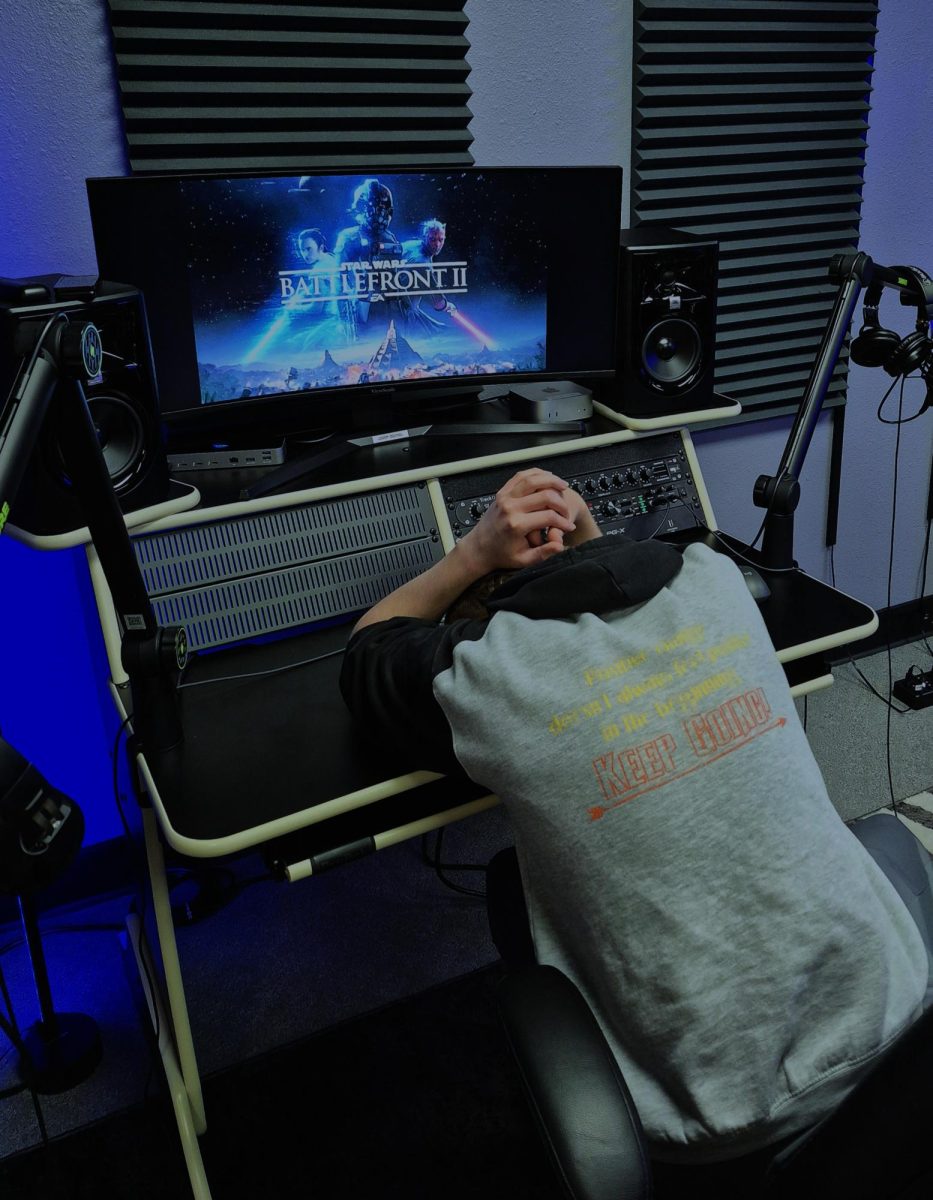
The feeling of sitting at my desk at 3 a.m., eyes heavy, hands aching from drawing yet another design, has become all too familiar. As a graphic design major, I spend hours every day staring at a computer screen, editing layouts and working on digital projects, only to then head into my studio art classes and spend even more time on hands-on pieces.
Sometimes I stare at my work and wonder if it’s even mine anymore, or just a product of exhaustion and deadlines. The physical toll is real: headaches, blurry vision, trouble focusing, and a nagging sense of anxiety about whether my work is good enough.
When assignment after assignment piles up, even the creative projects can feel forced. I often feel like the deadlines don’t give me enough time to be as creative as I wish, so I end up watering myself down, and that makes me less confident in the work I’m supposed to be proud of. Several nights this past week, I was up until 1:30 a.m., then had to turn around and get up at 7 to be ready for my 9 a.m. class. The next night I was up until 3 a.m., and 5 a.m. the next.
To be as creative as I need to be, my sleep always suffers, and I constantly find myself bargaining over how much rest I’m allowed to get to finish projects.
This makes me understand why so many creative students, especially art students, don’t play sports or join too many activities. As a graphic design major involved in both cheer and stunt, it’s extremely hard to balance those commitments and still try to have a social life. The job aspect of my life suffers too, because I don’t have enough time to work and earn money in college.
Everywhere I look, I see deadlines, practice times, and money leaving my account, but no real time to sit back and take my foot off the gas. Instead of experimenting or taking creative risks, students focus on completing assignments as quickly and efficiently as possible. Over time, this constant pressure reduces the ability to think creatively. 
Studies have found that higher levels of burnout are directly linked to lower creativity. In other words, the more exhausted students become, the harder it is for them to produce original ideas. On top of that, sleep deprivation, often caused by all-nighters, negatively impacts cognitive flexibility and problem-solving, both of which are essential for creative work.
So while students may be producing more work, they’re not necessarily producing better work.
That’s the irony of hustle culture. It promises success through constant effort, but often leads to stress, anxiety, and decreased performance over time. Instead of helping students grow, it leaves them mentally drained and creatively stuck. College shouldn’t feel like burnout training.
If universities truly want to support creativity and innovation, they need to rethink the systems that reward overwork. That could mean spacing out deadlines, encouraging balance, or simply recognizing that rest is not laziness, it’s necessary for creative thinking.
Because creativity isn’t something you can force at 3 a.m.
And if hustle culture continues to define college life, students won’t just graduate tired, they’ll graduate having lost the very creativity they came to develop.