

Before the tournaments, before the team ownership, before the college classrooms, Jesus Silva’s world was measured in the hum of industrial machinery. It was a sound without soul. A 14-hour drone that entered through the ears and settled in the chest. He would wake in the afternoon, microwave last night’s meal, and drive the same cracked stretch of Iowa asphalt to a factory where the air smelled of hot metal and the clock moved like it was stuck.
“I felt like I didn’t have a purpose,” Silva shook his head. “Just going through the motions. Wake up, eat, sleep, work, and repeat.”
He could handle it. That was the issue. He took double shifts. He banked steady pay. He proved he could endure a life he didn’t want.
But endurance, he learned, is not the same as living.
While working on the factory floor, Silva developed an interest in computer hardware, troubleshooting machines when problems came up. When an internal IT position opened, he applied and advanced to the final round of interviews. The rejection that followed became a turning point.
“They told me they would hire me,” Silva said. “But I didn’t have the qualifications. I only had a high school diploma.”
He left the job soon after.
The decision to change direction didn’t happen all at once. Silva points to conversations with his brother as the moment things became clearer. Living together at the time, his brother asked direct questions: Did he enjoy the work? Could he see himself doing it long-term? Did he want that life in the future?
The answer to each was no.
At the factory, older coworkers reinforced that feeling. Some were blunt.
“You shouldn’t be working here,” Silva recalled being told. “You’re young. You should be in school.”
Encouraged by those conversations, Silva enrolled at Marshalltown Community College, staying at home and choosing a path he saw as practical. He focused on computer networking and management, viewing college as a way to build skills and access better opportunities.
He admits he hadn’t been a strong student in high school and didn’t enjoy the classroom. But this time felt different. Earning his associate degree became one of his proudest accomplishments.
Soon after, another opportunity emerged — one he hadn’t planned for.
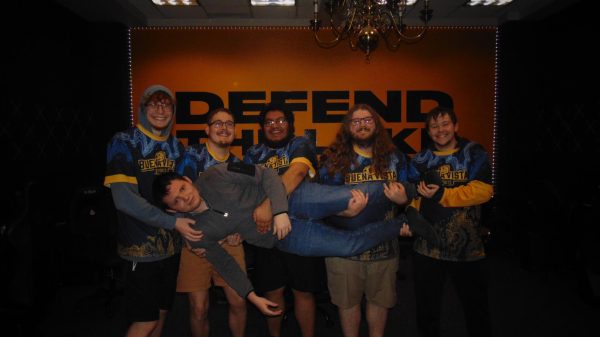
A recruiter from Buena Vista University’s esports program visited campus, introducing Silva to a path that combined competition, teamwork and leadership. With encouragement from people he trusted, he decided to continue his education.
“You have an opportunity to get your bachelor’s and do something you like at the same time,” Silva said. “But you have to decide if that school is for you.”
He transferred to Buena Vista, extending his academic path and stepping into a new environment.
A competitive outlet
Tom Clancy’s Rainbow Six Siege is a tactical shooter built on coordination, strategy and precision. For Silva, what started as a hobby became something more structured — a way to channel discipline and competitiveness.
“It was the first game that made me competitive,” Silva laughed. “The aspect of winning is so addicting — like studying for a test and then acing it.”
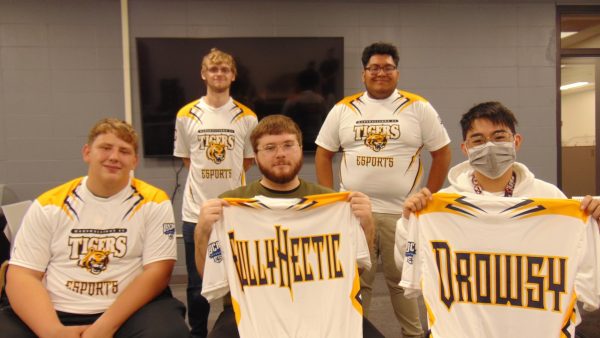
But Silva didn’t stop at competing. He stepped into leadership roles, both as a player and a coach, often overanalyzing gameplay and delivering detailed breakdowns to teammates.
“There are times I oversaturate and confuse my team,” he admitted. “But they are learning, and I am improving at explaining myself.”
The breakthrough came after years of near-misses.
For six consecutive years, Silva found himself finishing in second place. He started calling himself the “second-place champion.”
That changed with a championship win alongside his Buena Vista teammates.
“For once in my life, I can say that I broke free and achieved something I was passionate about,” he smiled.
His ambitions grew beyond competition. Silva co-founded an esports organization with a small group of partners, taking on responsibilities that extended beyond gameplay — including management, finances and team development.
The process has not been smooth. Teams have disbanded, players have moved on, and resources have been limited.
“I always enjoyed seeing my team get better,” he said. “It’s a drug, I swear.”
There’s also a desire to challenge perceptions. Silva says people often dismiss esports as unproductive or unserious work.
“They think we’re just people who don’t have a profession or that it’s a waste of time,” he shrugged. He disagreed — and is working to prove otherwise.
Silva’s days now are a balancing act: classes, studying, competitive play, and running an esports team. Structure is essential. Sleep, time management, and consistency are priorities — but sacrifices are unavoidable.
“He gives up having fun with us or time to relax,” said Tar Ler, a Buena Vista sophomore and a friend of Silva. “He’s just so busy trying to keep up with everything he has going on.”
Ler describes Silva as calm, reliable, and grounded, even in chaotic situations.
“He doesn’t react to rising emotions with more emotion,” Ler said. “He stays calm and brings things back down.”
Looking ahead
He speaks about his mother working long hours and caring for her children through difficult circumstances. Providing for his family — both financially and emotionally — remains a defining goal.
“Being able to take care of my family,” he said. “That’s what success looks like to me.”
Silva says his identity as a Latino man is closely tied to that responsibility — to provide, support and stay grounded in his values.
“It’s not about money or being better than anyone,” he said. “It’s about being someone who can take care of the people in your life and help them grow.”
He hopes to expand his esports organization into something more established, creating opportunities for others to enter the industry and potentially compete at higher levels.
For himself, the goal is simpler. “Doing something I’m passionate about and being paid for it,” he said.
He understands the uncertainty ahead. He has already experienced setbacks, doubt and long stretches of demanding work. But he also knows what it feels like to be stuck — and has no intention of returning to that version of his life.
To others facing similar uncertainty, Silva offers simple advice.
“It’s about skills, experience, and knowledge,” he said. “You have to decide what you’re going to do. No one else can make that choice for you. But there is a place for you.”
For Silva, that place is still taking shape. But unlike the factory shifts that once defined his days, the direction now feels his own.