


A Growing Need in Rural Communities
Like many rural community towns across Iowa, Storm Lake has dealt with a quiet, ongoing issue for years now: what to do with the community’s many stray and abandoned animals. Without a dedicated shelter in town, animals have often been passed around between temporary solutions, whether that’s residents trying to figure things out on their own or the police dropping animals off at the local vet
In December, that fragile system became even more strained when the local veterinarian who had been taking in stray animals retired, leaving the community with even fewer options and a growing need for a long-term solution.
According to Shelter Animals Count, a program associated with the ASCPA, Iowa has 65 animal shelters and 37 rescues statewide. While those figures are comparable to neighboring Nebraska, which reports 105 animal shelters and rescue organizations, Iowa lags considerably behind other Midwest states such as Illinois, Minnesota, Missouri, and Wisconsin for homeless animal care facilities.
With no clear or consistent system in place, both animals and people are left in difficult situations. But now, a small group of community members is trying to change that. Caring Paws, a nonprofit organization, is working to turn that gap into a long-term solution, helping create Storm Lake’s first animal shelter.
From One Idea to a Movement
For Susan Lyngaas, the president of Caring Paws, it all started with one moment at which she decided to speak up. “I opened my mouth when I probably should have kept it closed… I said I thought we needed an animal shelter in Storm Lake,” Lyngaas said.

Her comment came during a city council work session, but like all good grassroots efforts, it didn’t just end there. After the meeting, about 20 people stayed behind, all agreeing that something needed to be done. Lyngaas agreed that evening to try to convene a meeting to brainstorm solutions. She and others were surprised when around 40 people showed up to the first official meeting.
While that number eventually narrowed itself down to a much smaller, committed group, Lyngaas said that’s normal for something like this. What matters most is that the people who stayed are the ones continuing to push the project forward and turn an idea into something real.
What started as a simple comment grew into an organized effort focused on locating funding, developing leadership, and creating a clear business plan.
The need for a shelter in Storm Lake isn’t hard to see. Right now, there isn’t a consistent system for handling stray animals, especially cats. “There’s a significant cat problem… [because of the] transient society that we have in Storm Lake for sure,” Lyngaas stated.
She explained that when people move in and out of the community frequently, sometimes pets are left behind. In addition, rural towns the size of Storm Lake also face a dearth of housing options, and rental properties don’t always allow pets.
“They get dumped a lot, or [people] think they’re giving it to somebody else who doesn’t really want it and they dump [the pet],” Lyngaas said. Without a shelter, those animals don’t have a reliable destination, which puts pressure on local services that were never designed to handle that long-term role. Finally, many of the homeless cats are also not spayed or neutered, so they have litter after litter.
All combining to create the perfect storm and a problematic cycle without a real solution.
Funding the Mission
Running a shelter, even at a basic scale, comes with financial challenges. Lyngaas said the organization’s estimated annual budget is around $140,000, which reflects the realities of operating as a small nonprofit compared to larger municipal or Humane Society facilities. She noted that unlike cities with public funding support, animal shelters in Iowa are typically privately run and rely heavily on ongoing fundraising to stay operational.
“Funding is always a problem… We project a budget of $140,000 a year,” she stated. But like many other animal shelters across Iowa, Caring Paws operates as a nonprofit, which means it relies heavily on donations rather than consistent government funding. To meet demands, Caring Paws has developed a fundraising strategy that is focused on building relationships and interaction with donors focused on long term partnerships. James Hampton and Jeff Stark doubled down on the fact that successful fundraising is built through building trust over time.
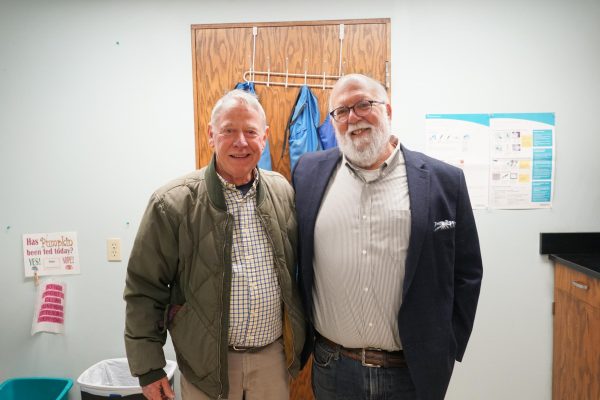
One of the biggest boosts the organization received came from the Thomas Samsell Trust, which left behind $400,000 to help support the creation of an animal shelter in Storm Lake.
Though an important starting space, the trustee required Caring Paws to raise matching funds, pushing the non-profit group to connect directly with community members and potential donors.
That fundraising effort has been led in a large part by board members James Hampton and Jeff Stark, who emphasized that building community connections takes both time and trust.
“If you’re going to ask somebody for a lot of money, you need to expect to spend some time with them,” Stark said. In many cases, that means sitting down for long conversations, following up, and making sure donors understand both the need and the plan.
But it’s not just about asking for money, it’s about showing people that their contribution will make a difference. Hampton said that people are more likely to support something when they can see progress.
“People like to associate with winners with successful organizations,” Hampton stated. As Caring Paws has continued to raise money and move forward with plans, its credibility has grown, making it easier to bring others on board and continue building momentum.

Caring Paws financial model and their way of handling thing is similar to other animal shelters in the United States, nationally 5.8 million animals enter the shelter each year, which keeps constant pressure on organizations to operate efficiently while taking good care of the animals. Most small to mid-sized shelters function on annual budgets of around $250,000 to $300,000, which caring paws aren’t that far off. On the other side of the spectrum large city funded Animal care centers like “Animal Care Center of NYC,” operate with a larger budget around $34-37 million dollars.
Building a Solution from the Ground Up
Although fundraising was the fledgling non-profit’s first order of business, the next concern was finding space. And this is where the retirement of Dianne Johnson, long-time vet in the community, closed one door, but opened another.
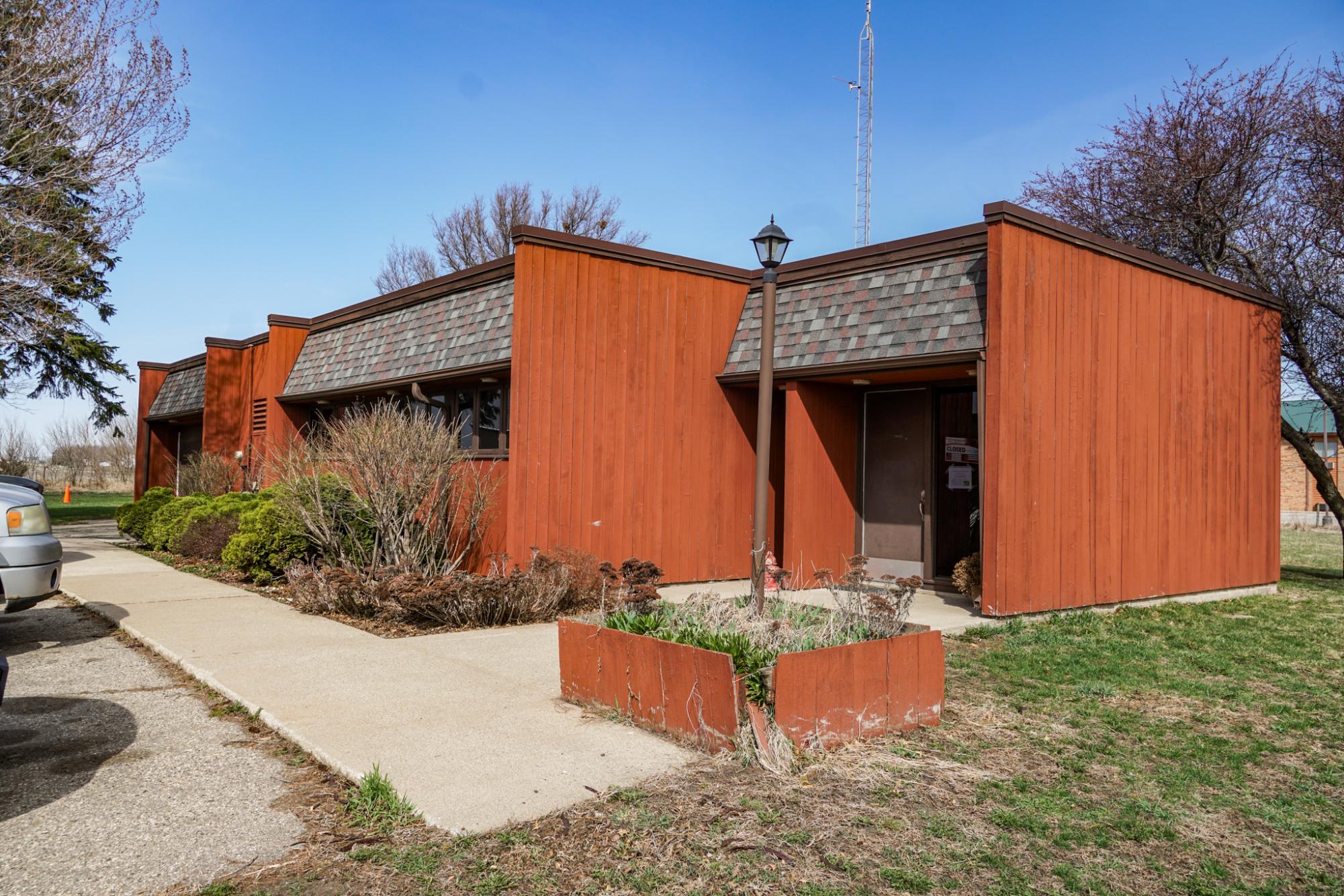
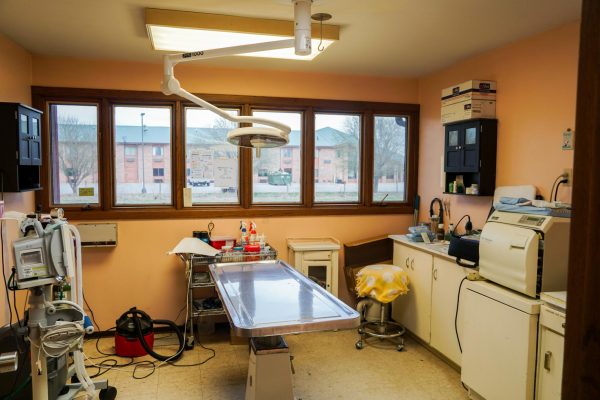
After much discussion and investigation, instead of building a whole new facility from the ground up, the Caring Paws board decided to purchase the former Lake Animal Hospital, where Johnson worked, and renovate it into a shelter. “We purchased Lake Animal Hospital… we hope to be in there sometime late summer to have an animal shelter,” Lyngaas said.
The decision ultimately came down to cost and practicality. According to Jeff Stark, the board was initially considering building a new facility that would cost “possibly $700,000 just to build a new building from scratch.” In contrast, purchasing the former Lake Animal Hospital for $275,000 allowed the organization to significantly reduce upfront expenses while still moving the project forward.
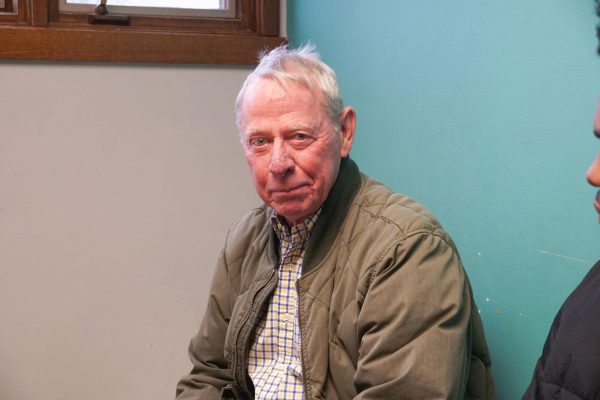
Stark said the group evaluated both a new build and an existing structure side by side before the opportunity to buy the building shifted the direction of the project. While renovations are still required, leaders say the purchase made the timeline and budget far more manageable.
It also gives the group a space that is already designed for animal care, which helps simplify the transition into a working shelter. Once completed, the shelter is expected to hold around 60 cats and 10 dogs at a time.
“We project probably at capacity, having 60 cats and about 10 dogs,” Lyngaas stated. That number reflects what the organization believes it can realistically manage while still providing proper care and attention to each animal.
At the same time, the organization has been careful about defining what it can realistically handle. While there has also been discussion about expanding into animal pickup or rescue services, Lyngaas said that’s not something they can take on right now.
“We don’t have a vehicle, and we won’t have staff to go out and try and round up a dog… we’re not going to be in the rescue and pickup business,” she said.
Instead, the non-profit’s focus will be on intake, care, and adoption, making sure that once animals arrive, they are properly looked after and eventually placed in loving homes.
According to Lyngaas, Caring Paws also looks to expand into community-focused programs, including vaccination clinics, obedience training, and educational opportunities. “I want the public to be comfortable coming to their animal shelter. It’s not just the place where lost dogs go,” she said.
By doing this, the organization hopes to become more than just a shelter and instead a resource for the entire community.
Understanding the Stray Animal Challenge
The group’s focus on community is what ties everything together. The organization isn’t just trying to solve a problem; it’s trying to build something that people can be a part of. In many ways, that reflects something rural communities already understand when formal systems are limited. People tend to step in, organize, and create solutions together
Near future steps will require recruiting volunteers for the day-to-day operations. Whether it’s walking dogs, feeding, watering, cleaning, or helping promote new arrivals needing homes on social media, the non-profit’s leadership acknowledges that the grassroots effort won’t end when the doors open. Because Caring Paws aims to be a shared community space, its mission will involve continued education. “We need you, the community, to adopt our animals [but also] to learn how to take care of them,” Lyngaas said.
For her, the impact goes beyond just the animals. It’s also about what the shelter can offer people, especially younger members of the community.
“I think it’s highly needed in Storm Lake for the children,” she stated. A volunteer-led effort can help teach responsibility, compassion, and connection in a way that goes beyond the shelter itself.
In that sense, the model being built in Storm Lake could reflect what other communities might consider when facing similar challenges, showing how local involvement and shared responsibility can lead to long-term solutions.
Looking Ahead
Looking ahead, the goal is to have the shelter open by late summer or early fall, depending on how construction timelines play out. As there are still some unknowns, like contractor schedules and hiring a full-time director, the foundation is already there and laid out.
From a single comment at a meeting to a fully funded project with a physical location, Caring Paws has already made steady progress. If everything continues to move forward, the shelter will not only provide a solution to a long-standing issue but also create a lasting resource for the Storm Lake community.
In many ways, it represents what can happen when a group of people sees a problem and decides to take responsibility for it.
At the same time, the work doesn’t stop once the doors open. Keeping the shelter running will take consistent funding, volunteers, and continued community involvement. The organization will have to maintain that same level of trust and support that helped get it started in the first place.
But based on how far they’ve already come, there’s a reason to believe that support will continue. Caring Paws isn’t just about opening a building; it’s about creating something that will last.
If successful, this could change how Storm Lake handles animal care for years to come, while also giving people a chance to connect, give back, and be part of something bigger than themselves.