

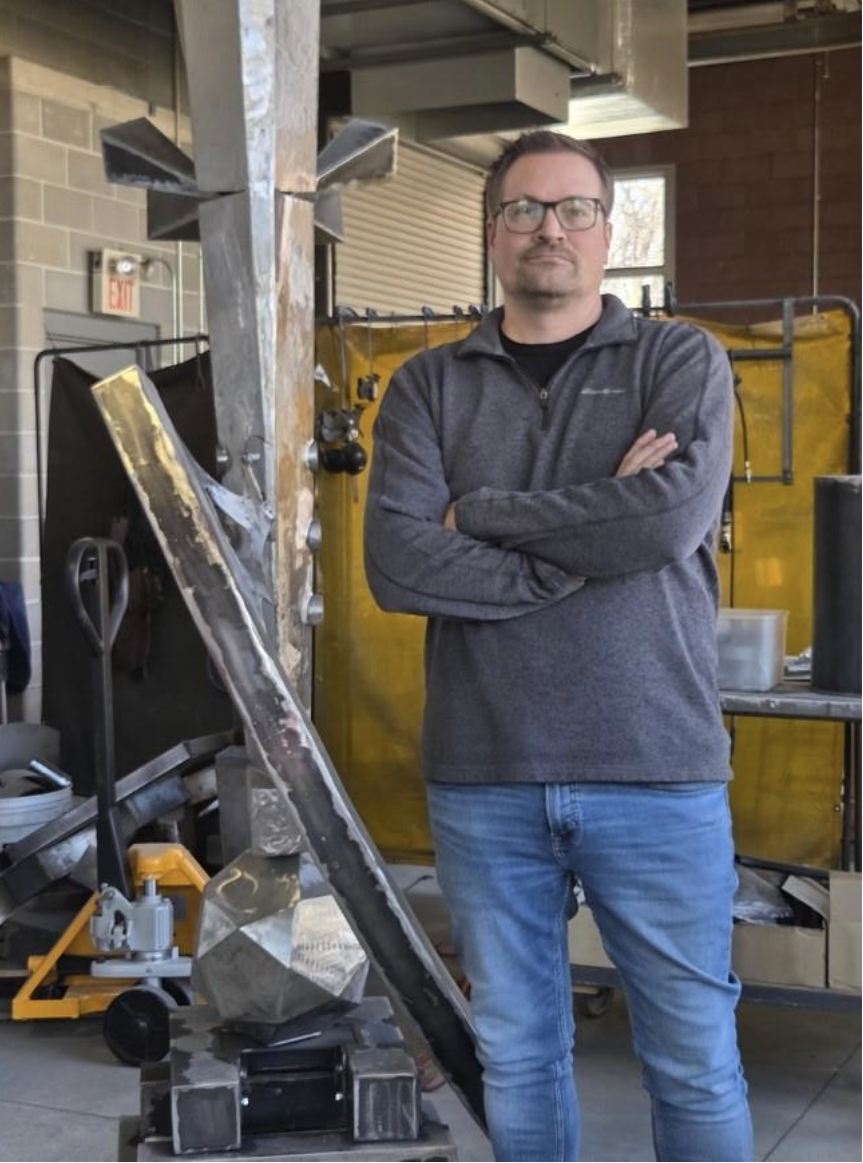
During second or third grade, David Boelter entered a poster design contest for the state of Iowa and won, already knowing that he loved art. However, his love for sculpting was discovered later in life when he transferred to Buena Vista University and met the right people.
Professor David Boelter is a sculptor and a professor of art here at BVU, where he has been teaching for 25 years now. He had always loved art, and it was unclear to him as a college freshman, what kind of career he wanted and what kind of art he wanted to spend his life working on. So, when he transferred, made connections, and gained more knowledge about his options and his passions, he knew what he wanted to do.
Boelter is working on a few large-scale projects that he plans on exhibiting at a show during the summer once they are finished. While he is alternating between these projects, he has a process that he goes through for his works. He begins with an idea, an image, or a specific concept in his head that he usually sketches on a piece of paper before he starts working on it.
Working on a large three-dimensional project, it tends to change and develop from the original small two-dimensional sketch, which is something professor Boelter acknowledges as he learns to adapt to the changes he needs to make for the sake of his sculptures.
Boelter works on many different types of projects, not really set on one medium. While working on multiple projects at a time, he would keep getting ideas for a project that wouldn’t work well combined, so he gives each project what it needs, even if it ends up taking longer and being more taxing. Because his art will speak to him and let him know what it needs.
“I mean, there’s so many things that have had, like, profound impacts on me, but it’s the ones that I can recall that I’ll never forget, you know, that I know had the biggest impact on me,” said Boelter.
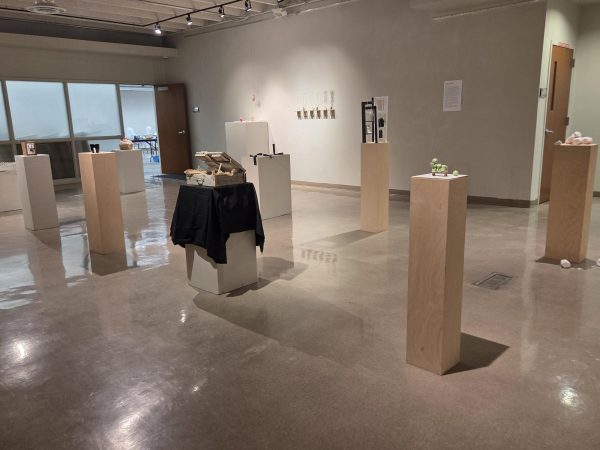
Growing up, he had always loved art, and he loved to draw, especially because he liked the feeling of being good at something, but it wasn’t until he made connections with people and gained more information about the world that he figured out exactly what he wanted to do and who he wanted to be. Working with other artists and seeing the work of many artists also had an influence on his love for art.
As a teacher, Boelter encourages students to think critically and figure things out by yourself but willing to step in if they need help. He enjoys the problem-solving aspect when making art and makes sure his students develop their own problem-solving skills and expand their creativity, while also understanding what students are just learning how to do.
One of Boelter’s students, Nick Hudson, expressed the kind of teacher he is, detailing his understanding nature with his students.
“Dave is, like very understanding that we’ve not worked with these materials before. And so, he tries to warn us beforehand about what the materials might do if we mix up like how much we should add or how long we should let it dry for,” said Hudson.
From growing up, and not sure what he wanted his career to be to becoming someone who can shape future generations of artists, teaching students to adapt to difficult situations.
“Yeah, you have to have an openness to do it. You have to have to love this idea of complications are gonna arise and problems are gonna happen,” said Boelter.