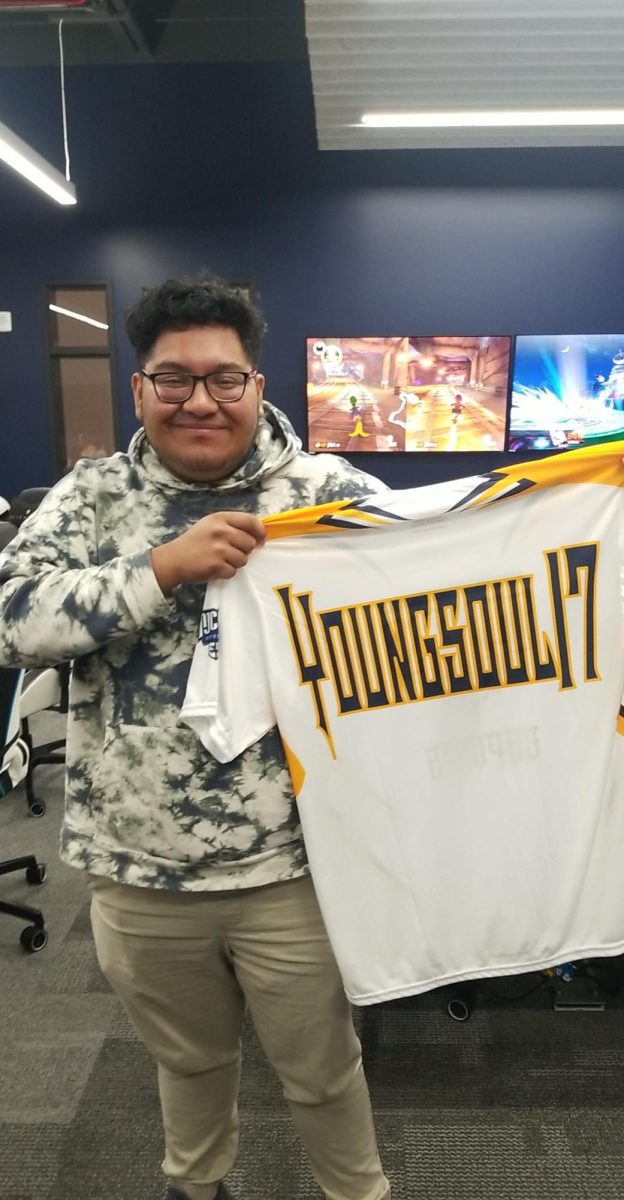


Flashing lights bled through the blinds into the esports console room. Keyboards clattered. Voices tangled in aggressive callouts. Then, one collective “yeah” cut through the noise. Another victory for Buena Vista University’s Overwatch Gold team. As the wrap-up began, everyone celebrated each other’s plays and teased about what they did to their opponents. Once the celebration was over, everyone went back to their dorms for the night, thinking about their victory on the way there.
Except for Landon.
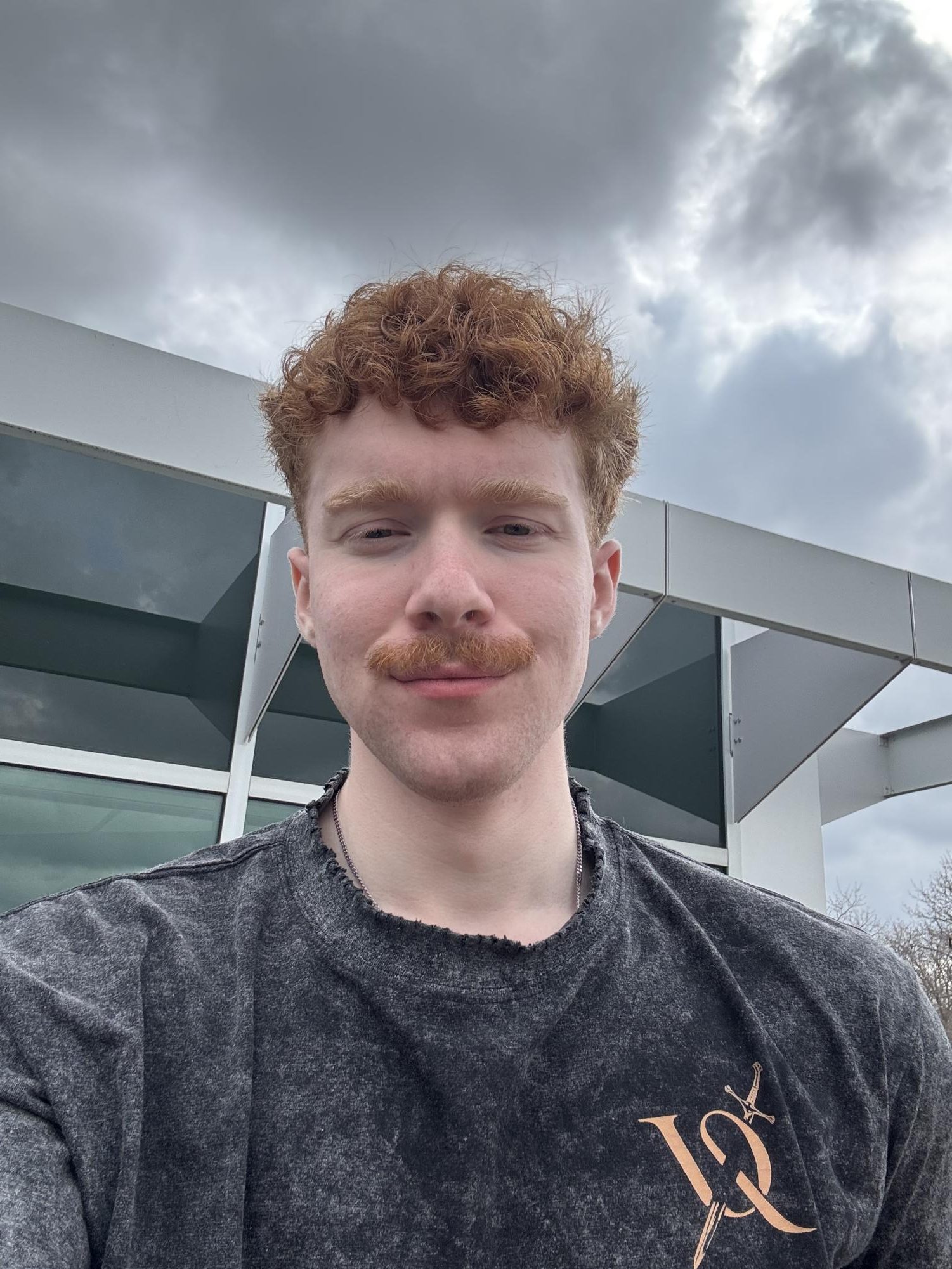
Sure, he felt victorious tonight, but something still felt out of place. Landon DeMoss, a political science major on the legal studies track, transferred to BVU as a junior, making this his second year on campus. DeMoss pulled this off with the help of college courses from Iowa Central Community College and BVU during his high school career. Thanks to that, he’ll be graduating in May 2026.
But he never had his career path set in stone. There was, however, a major factor that guided him to where he is today.
“I decided to do mock trial for the first time, and I really liked it. And ever since then I’d always thought I would be an attorney … I didn’t put any of that into practice until about my junior or senior year of high school,” DeMoss said.
As he began to study law, he didn’t have much of a problem with academics. In fact, he was passing with acceptable grades. The only problem he had was being unable to keep up with his own standards.
“To get into law school we have to take the LSAT, and when I first started preparing for it, I wasn’t good enough to be at the level I wanted to be … I really doubted whether or not I was capable of being where I am now,” he added.
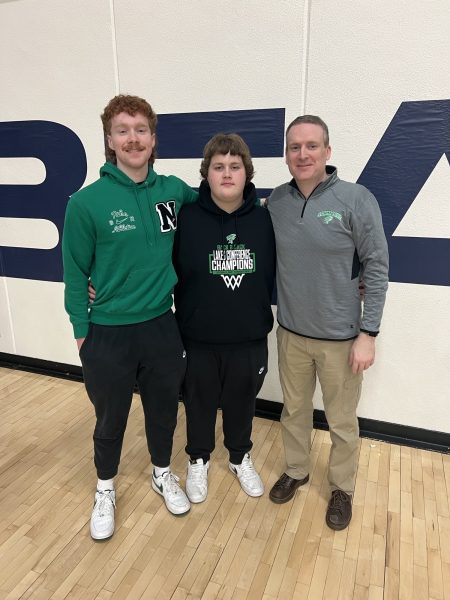
Thankfully, DeMoss had some people to assist him during those doubt-filled times. He had his father who wanted to be an attorney, but pursued another career instead.
“His whole life he kind of silently prepared me to be [an attorney], like he was always arguing/debating with me. So that’s how I kind of learned how to debate in the argumentative parts,” DeMoss said.
He also had Dr. Bradley Best, the professor of political science at BVU, to help him stay ahead of the ball game.
“Shout out to Dr. Best. He’s really helped me a lot with understanding the material. Some of the stuff they’re talking about in law school I’ve already talked about with Dr. Best. So it’s just kind of nice to be ahead a little bit on the stuff that I’ll learn later,” he said.
Since DeMoss has less than a month left at BVU, he was asked to describe some of the pros and cons of an early graduation. One advantage that was obvious to him was the budget costs. He’s only here for half the time, so he only needs to spend half the price. However, one disadvantage he mentioned was how time became extremely valuable.
“It’s harder to build those connections because while people normally have four years, I only have two. It’s a big difference, because you have to value your time a lot more … It would have been nice to stick around and to continue making those new developments,” DeMoss said.
A University of California study found the three-year graduation rate for freshmen rose from 1.8% in 1999 to 6.4% in 2021, then to 7.4% in 2022.
Mandi Mollring, the assistant dean for student success and campus engagement, shared her thoughts on some of these statistics.
“I would say more of my generation was focused on being in college and staying for four years … But now it has shifted a little bit, where it’s ‘how can I essentially get a head start’,” Mollring said.
She also brings up one pro and con worth considering. The pro was the cost, as mentioned previously with DeMoss. But the downside was in terms of student preparation.
Mollring stated, “Sometimes students aren’t 100% prepared. At the age of 20, students graduating, they might be thrown into a workplace with people who are all 29, 30 or older. And you’re put into a culture where you have to adjust your behaviors … That generational gap can sometimes be hard to overcome.”
This was also on the disadvantage list that DeMoss explained in terms of valued time. “That’s something I have to get used to, and going back to me being a senior and being the age of a sophomore … You feel a little bit out of place sometimes … It’s like these people kind of know me, but they don’t know me,” DeMoss said.
And with DeMoss aware of the age gap he would have to adjust to, was he ready for the world?
DeMoss responded: “You’re never ready, right? But it’s always calling … I feel like I’ve been prepared to do that … It’s kind of like for a game, you spend all this time practicing and then you get there and you’re like, ‘ah … this is nervous,’ and then you adjusted after a few rounds.”
He added: “For me, I really enjoyed that thick of it when I was studying every day for the LSAT and balancing academics, electives, and practice … and it was my favorite part because I felt like I was in the zone.”